
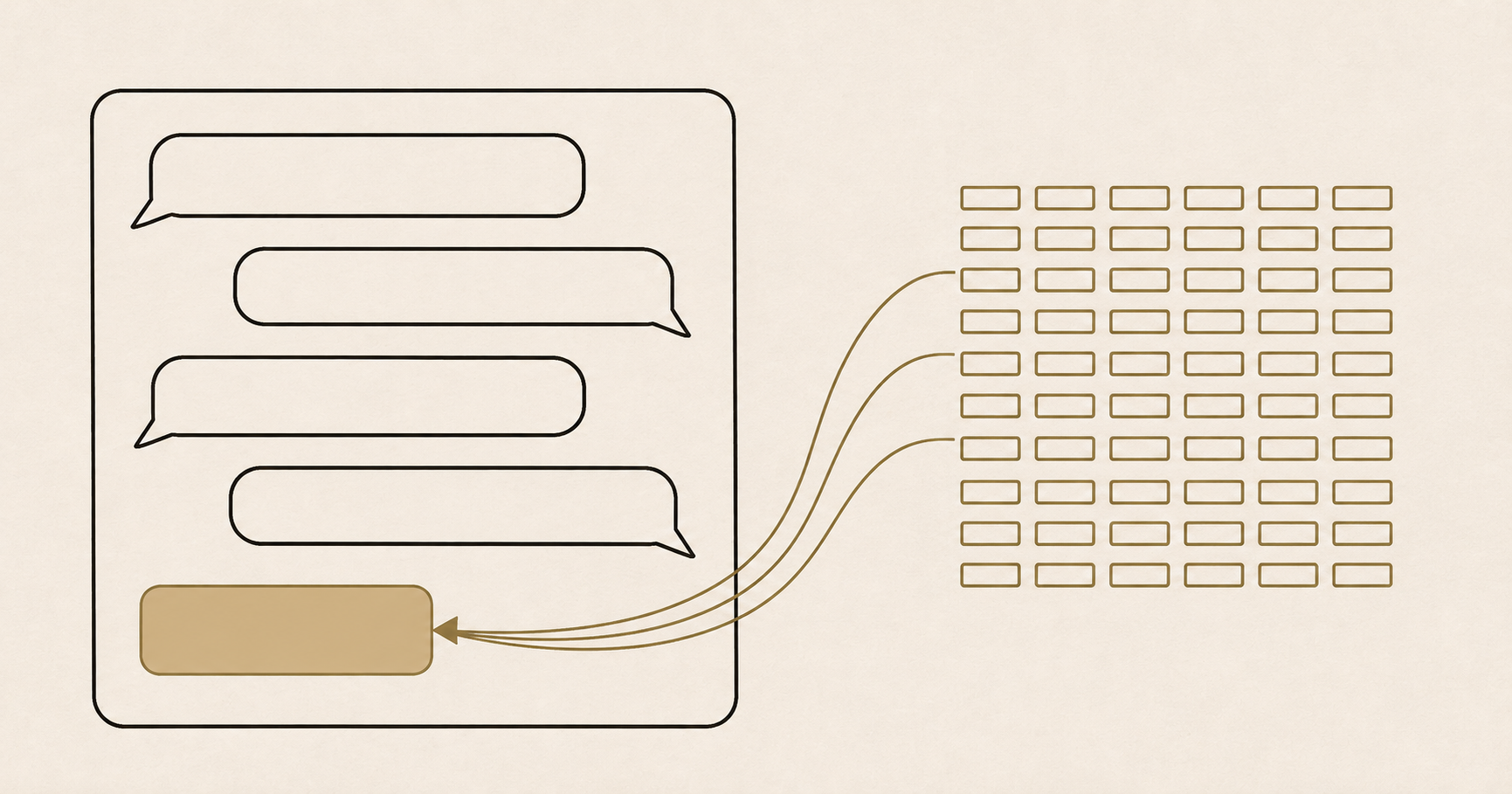
Since 21 October 2026, South African businesses can buy advertising inside ChatGPT. For the first time, a local brand can appear beside a conversation in which someone may have spent an hour explaining what they want, what they can afford and what is worrying them.
The advertiser ordinarily never sees that conversation. The ad works because the system understood it.
That makes ChatGPT advertising a different data protection problem from buying a banner. Marketers see a channel that reaches people at the moment of decision. Information Officers see a harder question: whose personal information is being used to make those ads effective, and on what authority?
Both have a point. Showing someone an ad because they asked ChatGPT about running shoes is one thing. Uploading 100,000 customer email addresses so OpenAI can find which of its users are your customers is another. Both are advertising. Under the Protection of Personal Information Act 4 of 2013 (POPIA), they carry very different obligations.
The decision in brief
The issue. Since 21 October 2026, South African businesses can buy ads inside ChatGPT. They can also give OpenAI their customer lists and website data to target and measure those ads.
Why it matters. Contextual ads need no customer data. Customer matching and conversion tracking do, and they engage POPIA’s rules on lawful basis, further processing, prior authorisation, direct marketing and transfers abroad.
Decision or next step. Start with contextual campaigns. Treat the pixel and customer-list uploads as separate projects, each approved on evidence. Switch off creative enhancements before your first campaign runs. The upload button is not a lawful basis.
Who this is for
Marketing · Privacy and Data Protection · Legal
What each takes from it: Marketing, what you can launch now and what needs approval first; Privacy and Data Protection, where POPIA bites on customer matching and conversion tracking; Legal, the open questions under s57 and s69.
Key facts
- ChatGPT ads launched in South Africa on 21 October 2026 and now run in 89 countries.
- Ads appear only on the Free and Go plans. Plus, Pro, Business, Enterprise and Edu accounts are ad-free.
- The minimum daily budget is R83 for rand-billed accounts and $25 for dollar-billed accounts.
- Advertisers can upload customer emails and phone numbers. A list must match at least 25,000 ChatGPT users before it can be used to target them.
- OpenAI’s contracts generally treat it and advertisers as independent responsible parties. Defined exceptions, including certain audience-matching activities, are treated as operator processing.
- Most financial, health and legal services ads are not permitted outside the US.
- Creative enhancements, which let OpenAI rewrite ads without per-version approval, switch on by default from 30 October 2026.
Why are ChatGPT ads different from other online advertising?
A search query captures a momentary request. A ChatGPT conversation can show how a person’s preferences develop, what constraints they face and which purchases they are weighing. OpenAI’s ad system reads the current conversation to decide whether an ad fits and which one. Where personalisation is on, it can also draw on past chats and saved memories.
OpenAI says advertisers never receive conversations, names, email addresses or precise locations, only aggregated reports. The exception is a user who chooses to message an advertiser through an ad; the advertiser then sees what that user sends. Take the rest at face value and the privacy question shifts. It is no longer mainly about what leaves ChatGPT. It is about what advertisers put into it: customer lists, website events and CRM records.
That reverse flow is where most South African organisations will take on legal exposure. Marketing can test the channel without handing over its customer database. If the business later wants to match customers against OpenAI’s users, it must justify that additional processing. The Information Officer has no reason to block the first step because the second raises hard questions. A contextual campaign is also less intrusive than the identity-linked targeting that already runs every day on Google and Meta. For most organisations, banning the channel outright would be disproportionate. Governing it by data tier is the better answer.
Which South African businesses can advertise on ChatGPT, and what does it cost?
Most regulated financial, health and legal offerings cannot be advertised on ChatGPT from South Africa. OpenAI’s ad policies generally prohibit financial and health services ads outside the US, and ban legal services ads there outright. Its onboarding eligibility table restricts deposit accounts, credit cards, insurance and mortgages to select approved advertisers, and excludes personal loans, payments, credit monitoring and health insurance. Assess the offering, not the industry: a bank cannot advertise personal loans, but a fintech selling accounting software probably can. OpenAI changed these rules four times between March and August 2026, so check them on the day you plan.
Cost is set per billing currency. OpenAI’s campaign set-up guide lists a minimum daily budget of R83 for rand-billed accounts and $25 for dollar-billed accounts. The daily budget is a seven-day average, so a single day can run to twice the figure. Some new self-service accounts can target only their home country until identity verification and spend thresholds are met.
What you send OpenAI determines the risk
The compliance burden depends on what you send OpenAI, not on whether you advertise. ChatGPT advertising involves three capabilities with rising risk. Contextual campaigns let organisations test the channel without first uploading customer records.
| Tier | What you do | Customer or prospect information used for targeting or measurement | Approval needed |
|---|---|---|---|
| 1. Contextual | Buy placements, write creative and context hints | None required | Creative and context-hint sign-off |
| 2. Measurement | Install the OpenAI pixel or Conversions API | Click identifiers, conversion events, hashed contact details | PIA, notice update, technical testing |
| 3. Custom audiences | Upload customer or prospect lists | Emails, mobile numbers, advertising IDs | PIA, s57 determination, suppression, Information Officer approval |
ITLawCo recommends. These are risk levels, not stages. Custom audiences do not require the pixel, and the pixel does not require custom audiences. Assess each capability separately and, where you combine them, apply the safeguards cumulatively. Keep problems contained: an unresolved issue should block only the activity it affects. An open s57 question stops the list upload. It does not stop a contextual campaign running alongside it.
What does POPIA require before you upload customer data or install the pixel?
POPIA does not mention advertising platforms. Its general conditions still decide whether Tier 2 and Tier 3 are lawful. The table separates what the law requires from what ITLawCo recommends.
| Provision | Law requires | ITLawCo recommends |
|---|---|---|
| s11: lawful basis | A ground in s11(1) for each disclosure | Record the chosen ground per data source, with the reasoning. Consent and legitimate interest (s11(1)(f)) are the likely candidates; which fits depends on how and why the data was collected |
| s11(3): objection | Honour objections on reasonable grounds where s11(1)(d) to (f) is relied on (s11(3)(a)), and objections to direct marketing (s11(3)(b)) | Suppress objectors automatically before every upload |
| s13 and s15: purpose | Further processing must be compatible with the original purpose, assessed against the s15(2) factors | A short compatibility note per source system |
| s18: notification | Tell data subjects, among other things, the recipients or categories of recipients | Name OpenAI and describe audience matching and conversion measurement |
| s57: prior authorisation | Prior authorisation where unique identifiers are processed for a new purpose and linked with another responsible party’s information, unless a qualifying code of conduct applies (s57(3)) | Decide in writing before any upload |
| s72: transfers abroad | A lawful basis for sending personal information outside South Africa | Verify the receiving entity and processing locations, then document the basis |
| Regulation 4(1)(b) | The Information Officer must ensure a personal information impact assessment (PIA) is done | Assess each new data flow before it goes live |
ITLawCo analysis · Authority indicates. Section 57 is a live question for custom audiences. A “unique identifier” is one assigned to a data subject, used by the responsible party for its operations, and uniquely identifying that person in relation to it. An email address or mobile number you use as a customer’s login or account key may qualify, even though you did not issue it. The Information Regulator’s prior authorisation guidance lists telephone and cellphone numbers among its examples. Matching that list against OpenAI’s users is linking with another responsible party’s information. Where both elements are present and no code of conduct applies, nothing should be uploaded until the s58 process allows it.
ITLawCo analysis · Open question. Section 69 is unsettled. POPIA defines electronic communication broadly. It covers any text, voice, sound or image message sent over an electronic communications network and stored until the recipient collects it. Whether a list-targeted ad inside ChatGPT is direct marketing by electronic communication has not been tested. Until it is, upload only people you could lawfully market to by email. Note that a general marketing opt-in does not, by itself, authorise disclosing someone’s details to a platform for matching.
ITLawCo analysis. A customer who gave you an email address to receive an invoice did not expect to be found inside an AI chatbot. If you cannot explain to that customer why you uploaded it, do not upload it. Section 15(2) looks at the relationship between the purposes, the nature of the information, the consequences for the customer and the manner of collection. A broadly worded privacy notice does not settle those factors on its own.
What the OpenAI pixel sends, and what is still unverified
Installing OpenAI’s pixel is not adding a visitor counter. It sends conversion events, click identifiers and, if you enable automatic advanced matching, hashed form data from your website to OpenAI. OpenAI’s contracts let it use conversion data for its own product development as well as your campaign reporting.
In September 2026, a security researcher tested a cookie called __obi. The results fall into three levels of certainty.
- What was observed. OpenAI sets
__obiwith a one-year lifetime and SameSite=None, which lets browsers send it with requests from other websites. In the researcher’s tests, it travelled to OpenAI from advertiser sites running the pixel. Safari blocked the route. - What the design could enable. A persistent identifier set by ChatGPT and returned from advertiser sites could let OpenAI connect a browser’s activity on those sites to a ChatGPT account.
- What is unverified (open question). Whether OpenAI actually makes that account-level connection, and what it does with it. OpenAI classifies
__obias an analytics cookie and has not explained it publicly.
ITLawCo recommends. None of the controls below depends on the unverified part. Gate the pixel behind consent, at least for EU and UK visitors. Keep it off account, claims, health and HR pages. Leave automatic advanced matching off unless your PIA approves it. Test what actually leaves your site before launch.
ITLawCo analysis. Who is responsible for that collection is a fact-specific question. OpenAI’s contracts treat it as an independent responsible party. But a website owner that chooses to embed the pixel may share responsibility for the collection and transmission step, whatever the contract says. Assess it for your deployment rather than assuming either answer.
Switch off creative enhancements first
OpenAI told advertisers it would turn creative enhancements on by default for new and existing self-serve campaigns from 30 October 2026. According to its help page, the feature can rewrite headlines and descriptions, translate copy, resize images and change landing URLs to suit each conversation. Enhanced versions can run without the advertiser approving each one, and OpenAI offers no preview of every variation.
ITLawCo analysis · ITLawCo recommends. You remain responsible for every claim those versions make, under the Consumer Protection Act, the Advertising Regulatory Board’s Code and OpenAI’s own terms. Opt out at account level before your first campaign runs. Turn the feature back on only once someone is monitoring live variations, and never for claims you cannot afford to have reworded.
ITLawCo recommends. While you are in Ads Manager, look at your context hints too. Hints tell OpenAI which conversations your ad should appear beside, so they are targeting. Do not write hints aimed at debt stress, job loss, illness, relationship breakdown or children.
Can employees use free ChatGPT for work?
ITLawCo analysis. It depends on what goes in. An employee asking ChatGPT to explain a public technical concept is in a different position from one pasting in customer records, staff information or a confidential deal. The second is the problem, whether or not you advertise. Free and Go accounts are ad-supported, and OpenAI reads their chats to select ads. Personal information entered there is disclosed to OpenAI without an operator agreement, for purposes your organisation does not control. A vendor-research prompt is also exactly the commercial intent advertisers pay to reach.
ITLawCo recommends. Organisations should govern which AI services employees may use and what information they may enter. An ad-free personal Plus or Pro subscription is no substitute for that control. For most organisations, the sensible policy is a Business or Enterprise workspace governed by contract, with personal accounts limited to work that involves no personal or confidential information.
Start small and require evidence before expanding
ITLawCo recommends. Start with a contextual campaign. It tests whether ChatGPT advertising works for you without sending OpenAI a single customer record. Before the first rand is spent, switch off creative enhancements, review your context hints, and restrict Ads Manager access. Review your privacy notice, and update it where the campaign introduces new purposes, recipients or disclosures, such as lead forms or tracking on your landing pages.
Then make each additional capability a deliberate decision. Install the pixel once the PIA is done and the tracking has been tested. Upload customer lists last, once s11, s15, s57 and s72 are answered in writing, or decide that the extra precision is not worth the exposure.
Permission to advertise is not permission to use every category of personal information that might make advertising work better.
Frequently asked questions
Are ChatGPT ads available in South Africa? Yes. OpenAI launched ChatGPT ads in South Africa on 21 October 2026. Businesses can buy them through partners or OpenAI’s self-service Ads Manager.
How much does it cost to advertise on ChatGPT in South Africa? The minimum daily budget is R83 for rand-billed accounts and $25 for dollar-billed accounts. It is a seven-day average, so a single day can cost up to twice that.
Do ChatGPT advertisers see users’ conversations? OpenAI says no; advertisers receive aggregated reports, unless a user chooses to message an advertiser directly. But advertisers can send OpenAI customer lists and conversion data, which OpenAI may also use for its own product development.
Is uploading a customer list to ChatGPT Ads legal under POPIA? It can be. You need a lawful basis under s11, a compatible purpose under s15, adequate notice under s18 and a transfer basis under s72. You also need to determine whether s57 prior authorisation applies.
Does POPIA’s s69 direct marketing rule apply to ChatGPT ads? It is untested. POPIA’s definition of electronic communication is broad, and list targeting strengthens the case that s69 applies. As a conservative floor, upload only people you could lawfully market to by email. It is not the whole test: a marketing opt-in does not, by itself, authorise disclosure to a platform for matching.
Do I need consent for the OpenAI pixel? For EU and UK visitors, yes. POPIA has no specific cookie rule, but holding the pixel until consent is the defensible default given its cross-site cookie behaviour.
Can banks, insurers and medical practices advertise on ChatGPT in South Africa? Mostly not. Outside the US, most financial products are restricted to approved advertisers or not allowed. Health and legal services ads are not allowed.
How do I stop ChatGPT from rewriting my ads? Switch off creative enhancements in Ads Manager, at account level and on each campaign.
Sources relied on
- Protection of Personal Information Act 4 of 2013, ss 1, 11, 15, 18, 57, 58, 69 and 72; Regulations relating to the Protection of Personal Information, 2018, reg 4(1)(b). Text.
- Information Regulator, Guidance Note on Applications for Prior Authorisation (revised, January 2024), paras 2.8 and 3.3.1. Text.
- OpenAI, Ad policies (as at 30 October 2026). Text.
- OpenAI, Ad Tools Terms; Ad Tools Data Processing Addendum; Conversion Terms (as at 30 October 2026). Ad Tools Terms, DPA, Conversion Terms.
- OpenAI Help Center, Ads in ChatGPT; Onboarding and policy eligibility; Create campaigns for ChatGPT Ads; Creative enhancements for ChatGPT Ads (as at 30 October 2026). Ads in ChatGPT, Eligibility, Campaigns, Creative enhancements.
- Thurrott, “ChatGPT Ads are coming to 26 new markets”, 22 October 2026. Article.
- TechCity, “ChatGPT ads can now find you by your email”, 17 October 2026, reporting 404 Media’s tests of 15 October 2026. Article.
- Search Engine Land, “ChatGPT Ads to enable creative enhancements on October 30”, October 2026. Article.
- Search Engine Journal, “OpenAI allows some health and finance ads in ChatGPT”, August 2026. Article.
- Tbreak and Tom’s Guide, reporting independent research on OpenAI’s
__obicookie, September 2026. Tbreak, Tom’s Guide. - Notebookcheck, “ChatGPT ads: German regulators warn about profiles built from chats”, 6 October 2026, reporting statements by the Hamburg and Berlin data protection authorities of 2 October 2026. Article.
Notice
This Field Note is general information on South African law, current as at 2 November 2026. It is not legal advice and should not be relied on as advice on any particular set of facts. The OpenAI terms and policies it discusses change often and may have changed since, and the prior authorisation and direct marketing questions it identifies are unsettled.